Curriculum
Chemistry 2e
Unit 1: Essential Ideas
0/14
-
Unit 1 overview: Essential Ideas
 Text lessonPreview
-
1.1 Chemistry in Context
Text lessonPreview
-
1.1 Chemistry in Context - Check yourself
 6 questionsPreview
-
1.2 Phases and Classification of Matter
Text lessonPreview
-
1.2 Phases and Classification of Matter - Check yourself
6 questionsPreview
-
1.3 Physical and Chemical Properties
Text lessonPreview
-
1.3 Physical and Chemical Properties - Check yourself
6 questionsPreview
-
1.4 Measurements
Text lessonPreview
-
1.4 Measurements - Check yourself
6 questionsPreview
-
1.5 Measurement Uncertainty, Accuracy, and Precision
Text lessonPreview
-
1.5 Measurement Uncertainty, Accuracy, and Precision - Check yourself
6 questionsPreview
-
1.6 Mathematical Treatment of Measurement Results
Text lessonPreview
-
1.6 Mathematical Treatment of Measurement Results - Check yourself
6 questionsPreview
-
Unit 1 review quiz: Essential Ideas
10 questionsPreview
Unit 2: Atoms, Molecules, and Ions
0/16
-
Unit 2 overview: Atoms, Molecules, and Ions
Text lessonPreview
-
2.1 Early Ideas in Atomic Theory
Text lessonPreview
-
2.1 Early Ideas in Atomic Theory - Check yourself
6 questionsPreview
-
2.2 Evolution of Atomic Theory
Text lessonPreview
-
2.2 Evolution of Atomic Theory - Check yourself
6 questionsPreview
-
2.3 Atomic Structure and Symbolism
Text lessonPreview
-
2.3 Atomic Structure and Symbolism - Check yourself
6 questionsPreview
-
2.4 Chemical Formulas
Text lessonPreview
-
2.4 Chemical Formulas - Check yourself
6 questionsPreview
-
2.5 The Periodic Table
Text lessonPreview
-
2.5 The Periodic Table - Check yourself
6 questionsPreview
-
2.6 Ionic and Molecular Compounds
Text lessonPreview
-
2.6 Ionic and Molecular Compounds - Check yourself
6 questionsPreview
-
2.7 Chemical Nomenclature
Text lessonPreview
-
2.7 Chemical Nomenclature - Check yourself
6 questionsPreview
-
Unit 2 review quiz: Atoms, Molecules, and Ions
10 questionsPreview
Unit 3: Composition of Substances and Solutions
0/10
-
Unit 3 overview: Composition of Substances and Solutions
Text lessonPreview
-
3.1 Formula Mass and the Mole Concept
Text lessonPreview
-
3.1 Formula Mass and the Mole Concept - Check yourself
6 questionsPreview
-
3.2 Determining Empirical and Molecular Formulas
Text lessonPreview
-
3.2 Determining Empirical and Molecular Formulas - Check yourself
6 questionsPreview
-
3.3 Molarity
Text lessonPreview
-
3.3 Molarity - Check yourself
6 questionsPreview
-
3.4 Other Units for Solution Concentrations
Text lessonPreview
-
3.4 Other Units for Solution Concentrations - Check yourself
6 questionsPreview
-
Unit 3 review quiz: Composition of Substances and Solutions
10 questionsPreview
Unit 4: Stoichiometry of Chemical Reactions
0/12
-
Unit 4 overview: Stoichiometry of Chemical Reactions
Text lessonPreview
-
4.1 Writing and Balancing Chemical Equations
Text lessonPreview
-
4.1 Writing and Balancing Chemical Equations - Check yourself
6 questionsPreview
-
4.2 Classifying Chemical Reactions
Text lessonPreview
-
4.2 Classifying Chemical Reactions - Check yourself
6 questionsPreview
-
4.3 Reaction Stoichiometry
Text lessonPreview
-
4.3 Reaction Stoichiometry - Check yourself
6 questionsPreview
-
4.4 Reaction Yields
Text lessonPreview
-
4.4 Reaction Yields - Check yourself
6 questionsPreview
-
4.5 Quantitative Chemical Analysis
Text lessonPreview
-
4.5 Quantitative Chemical Analysis - Check yourself
6 questionsPreview
-
Unit 4 review quiz: Stoichiometry of Chemical Reactions
10 questionsPreview
Unit 5: Thermochemistry
0/8
-
Unit 5 overview: Thermochemistry
Text lessonPreview
-
5.1 Energy Basics
Text lessonPreview
-
5.1 Energy Basics - Check yourself
6 questionsPreview
-
5.2 Calorimetry
Text lessonPreview
-
5.2 Calorimetry - Check yourself
7 questionsPreview
-
5.3 Enthalpy
Text lessonPreview
-
5.3 Enthalpy - Check yourself
6 questionsPreview
-
Unit 5 review quiz: Thermochemistry
10 questionsPreview
Unit 6: Electronic Structure and Periodic Properties of Elements
0/12
-
Unit 6 overview: Electronic Structure and Periodic Properties of Elements
Text lessonPreview
-
6.1 Electromagnetic Energy
Text lessonPreview
-
6.1 Electromagnetic Energy - Check yourself
6 questionsPreview
-
6.2 The Bohr Model
Text lessonPreview
-
6.2 The Bohr Model - Check yourself
6 questionsPreview
-
6.3 Development of Quantum Theory
Text lessonPreview
-
6.3 Development of Quantum Theory - Check yourself
6 questionsPreview
-
6.4 Electronic Structure of Atoms (Electron Configurations)
Text lessonPreview
-
6.4 Electronic Structure of Atoms (Electron Configurations) - Check yourself
6 questionsPreview
-
6.5 Periodic Variations in Element Properties
Text lessonPreview
-
6.5 Periodic Variations in Element Properties - Check yourself
6 questionsPreview
-
Unit 6 review quiz: Electronic Structure and Periodic Properties of Elements
10 questionsPreview
Unit 7: Chemical Bonding and Molecular Geometry
0/14
-
Unit 7 overview: Chemical Bonding and Molecular Geometry
Text lessonPreview
-
7.1 Ionic Bonding
Text lessonPreview
-
7.1 Ionic Bonding - Check yourself
6 questionsPreview
-
7.2 Covalent Bonding
Text lessonPreview
-
7.2 Covalent Bonding - Check yourself
6 questionsPreview
-
7.3 Lewis Symbols and Structures
Text lessonPreview
-
7.3 Lewis Symbols and Structures - Check yourself
6 questionsPreview
-
7.4 Formal Charges and Resonance
Text lessonPreview
-
7.4 Formal Charges and Resonance - Check yourself
6 questionsPreview
-
7.5 Strengths of Ionic and Covalent Bonds
Text lessonPreview
-
7.5 Strengths of Ionic and Covalent Bonds - Check yourself
6 questionsPreview
-
7.6 Molecular Structure and Polarity
Text lessonPreview
-
7.6 Molecular Structure and Polarity - Check yourself
6 questionsPreview
-
Unit 7 review quiz: Chemical Bonding and Molecular Geometry
10 questionsPreview
Unit 8: Advanced Theories of Covalent Bonding
0/10
-
Unit 8 overview: Advanced Theories of Covalent Bonding
Text lessonPreview
-
8.1 Valence Bond Theory
Text lessonPreview
-
8.1 Valence Bond Theory - Check yourself
6 questionsPreview
-
8.2 Hybrid Atomic Orbitals
Text lessonPreview
-
8.2 Hybrid Atomic Orbitals - Check yourself
6 questionsPreview
-
8.3 Multiple Bonds
Text lessonPreview
-
8.3 Multiple Bonds - Check yourself
6 questionsPreview
-
8.4 Molecular Orbital Theory
Text lessonPreview
-
8.4 Molecular Orbital Theory - Check yourself
6 questionsPreview
-
Unit 8 review quiz: Advanced Theories of Covalent Bonding
10 questionsPreview
Unit 9: Gases
0/23
-
Unit 9 overview: Gases
Text lessonPreview
-
9.1 Gas Pressure
Text lessonPreview
-
9.1 Gas Pressure - Check yourself
6 questionsPreview
-
9.2 Relating Pressure, Volume, Amount, and Temperature: The Ideal Gas Law
Text lessonPreview
-
9.2 Relating Pressure, Volume, Amount, and Temperature: The Ideal Gas Law - Check yourself
6 questionsPreview
-
9.3 Stoichiometry of Gaseous Substances, Mixtures, and Reactions
Text lessonPreview
-
9.3 Stoichiometry of Gaseous Substances, Mixtures, and Reactions - Check yourself
6 questionsPreview
-
9.3 Stoichiometry of Gaseous Substances, Mixtures, and Reactions
Text lessonPreview
-
9.3 Stoichiometry of Gaseous Substances, Mixtures, and Reactions - Check yourself
6 questionsPreview
-
9.4 Effusion and Diffusion of Gases
Text lessonPreview
-
9.4 Effusion and Diffusion of Gases - Check yourself
6 questionsPreview
-
9.4 Effusion and Diffusion of Gases
Text lessonPreview
-
9.4 Effusion and Diffusion of Gases - Check yourself
6 questionsPreview
-
Unit 9 review quiz: Gases
10 questionsPreview
-
9.5 The Kinetic-Molecular Theory
Text lessonPreview
-
9.5 The Kinetic-Molecular Theory - Check yourself
6 questionsPreview
-
9.5 The Kinetic-Molecular Theory
Text lessonPreview
-
9.5 The Kinetic-Molecular Theory - Check yourself
6 questionsPreview
-
9.6 Non-Ideal Gas Behavior
Text lessonPreview
-
9.6 Non-Ideal Gas Behavior - Check yourself
6 questionsPreview
-
9.6 Non-Ideal Gas Behavior
Text lessonPreview
-
9.6 Non-Ideal Gas Behavior - Check yourself
6 questionsPreview
-
Unit 9 review quiz: Gases
10 questionsPreview
Unit 10: Liquids and Solids
0/28
-
Unit 10 overview: Liquids and Solids
Text lessonPreview
-
10.1 Intermolecular Forces
Text lessonPreview
-
Unit 10 overview: Liquids and Solids
Text lessonPreview
-
10.1 Intermolecular Forces
Text lessonPreview
-
10.1 Intermolecular Forces - Check yourself
6 questionsPreview
-
10.1 Intermolecular Forces - Check yourself
6 questionsPreview
-
10.2 Properties of Liquids
Text lessonPreview
-
10.2 Properties of Liquids - Check yourself
6 questionsPreview
-
10.2 Properties of Liquids
Text lessonPreview
-
10.2 Properties of Liquids - Check yourself
6 questionsPreview
-
10.3 Phase Transitions
Text lessonPreview
-
10.3 Phase Transitions - Check yourself
6 questionsPreview
-
10.3 Phase Transitions
Text lessonPreview
-
10.3 Phase Transitions - Check yourself
6 questionsPreview
-
10.4 Phase Diagrams
Text lessonPreview
-
10.4 Phase Diagrams
Text lessonPreview
-
10.4 Phase Diagrams - Check yourself
6 questionsPreview
-
10.4 Phase Diagrams - Check yourself
6 questionsPreview
-
10.5 The Solid State of Matter
Text lessonPreview
-
10.5 The Solid State of Matter
Text lessonPreview
-
10.5 The Solid State of Matter - Check yourself
6 questionsPreview
-
10.5 The Solid State of Matter - Check yourself
6 questionsPreview
-
10.6 Lattice Structures in Crystalline Solids
Text lessonPreview
-
10.6 Lattice Structures in Crystalline Solids
Text lessonPreview
-
10.6 Lattice Structures in Crystalline Solids - Check yourself
6 questionsPreview
-
10.6 Lattice Structures in Crystalline Solids - Check yourself
6 questionsPreview
-
Unit 10 review quiz: Liquids and Solids
10 questionsPreview
-
Unit 10 review quiz: Liquids and Solids
10 questionsPreview
Unit 11: Solutions and Colloids
0/24
-
Unit 11 overview: Solutions and Colloids
Text lessonPreview
-
11.1 The Dissolution Process
Text lessonPreview
-
Unit 11 overview: Solutions and Colloids
Text lessonPreview
-
11.1 The Dissolution Process
Text lessonPreview
-
11.1 The Dissolution Process - Check yourself
6 questionsPreview
-
11.1 The Dissolution Process - Check yourself
6 questionsPreview
-
11.2 Electrolytes
Text lessonPreview
-
11.2 Electrolytes - Check yourself
6 questionsPreview
-
11.2 Electrolytes
Text lessonPreview
-
11.2 Electrolytes - Check yourself
6 questionsPreview
-
11.3 Solubility
Text lessonPreview
-
11.3 Solubility - Check yourself
6 questionsPreview
-
11.3 Solubility
Text lessonPreview
-
11.3 Solubility - Check yourself
6 questionsPreview
-
11.4 Colligative Properties
Text lessonPreview
-
11.4 Colligative Properties - Check yourself
6 questionsPreview
-
11.4 Colligative Properties
Text lessonPreview
-
11.4 Colligative Properties - Check yourself
6 questionsPreview
-
11.5 Colloids
Text lessonPreview
-
11.5 Colloids - Check yourself
6 questionsPreview
-
11.5 Colloids
Text lessonPreview
-
11.5 Colloids - Check yourself
6 questionsPreview
-
Unit 11 review quiz: Solutions and Colloids
10 questionsPreview
-
Unit 11 review quiz: Solutions and Colloids
10 questionsPreview
Unit 12: Kinetics
0/32
-
Unit 12 overview: Kinetics
Text lessonPreview
-
12.1 Chemical Reaction Rates
Text lessonPreview
-
12.1 Chemical Reaction Rates - Check yourself
6 questionsPreview
-
Unit 12 overview: Kinetics
Text lessonPreview
-
12.1 Chemical Reaction Rates
Text lessonPreview
-
12.1 Chemical Reaction Rates - Check yourself
6 questionsPreview
-
12.2 Factors Affecting Reaction Rates
Text lessonPreview
-
12.2 Factors Affecting Reaction Rates - Check yourself
6 questionsPreview
-
12.2 Factors Affecting Reaction Rates
Text lessonPreview
-
12.2 Factors Affecting Reaction Rates - Check yourself
6 questionsPreview
-
12.3 Rate Laws
Text lessonPreview
-
12.3 Rate Laws - Check yourself
6 questionsPreview
-
12.3 Rate Laws
Text lessonPreview
-
12.3 Rate Laws - Check yourself
6 questionsPreview
-
12.4 Integrated Rate Laws
Text lessonPreview
-
12.4 Integrated Rate Laws - Check yourself
6 questionsPreview
-
12.4 Integrated Rate Laws
Text lessonPreview
-
12.4 Integrated Rate Laws - Check yourself
6 questionsPreview
-
12.5 Collision Theory
Text lessonPreview
-
12.5 Collision Theory - Check yourself
6 questionsPreview
-
12.5 Collision Theory
Text lessonPreview
-
Unit 12 review quiz: Kinetics
10 questionsPreview
-
12.5 Collision Theory - Check yourself
6 questionsPreview
-
12.6 Reaction Mechanisms
Text lessonPreview
-
12.6 Reaction Mechanisms - Check yourself
6 questionsPreview
-
12.6 Reaction Mechanisms
Text lessonPreview
-
12.6 Reaction Mechanisms - Check yourself
6 questionsPreview
-
12.7 Catalysis
Text lessonPreview
-
12.7 Catalysis - Check yourself
6 questionsPreview
-
12.7 Catalysis
Text lessonPreview
-
12.7 Catalysis - Check yourself
6 questionsPreview
-
Unit 12 review quiz: Kinetics
10 questionsPreview
Unit 13: Fundamental Equilibrium Concepts
0/20
-
Unit 13 overview: Fundamental Equilibrium Concepts
Text lessonPreview
-
13.1 Chemical Equilibria
Text lessonPreview
-
13.1 Chemical Equilibria - Check yourself
6 questionsPreview
-
13.1 Chemical Equilibria
Text lessonPreview
-
13.1 Chemical Equilibria - Check yourself
6 questionsPreview
-
13.2 Equilibrium Constants
Text lessonPreview
-
13.2 Equilibrium Constants - Check yourself
6 questionsPreview
-
13.2 Equilibrium Constants
Text lessonPreview
-
Unit 13 overview: Fundamental Equilibrium Concepts
Text lessonPreview
-
13.2 Equilibrium Constants - Check yourself
6 questionsPreview
-
13.3 Shifting Equilibria: Le Châtelier’s Principle
Text lessonPreview
-
13.3 Shifting Equilibria: Le Châtelier’s Principle - Check yourself
6 questionsPreview
-
13.3 Shifting Equilibria: Le Châtelier’s Principle
Text lessonPreview
-
Unit 13 review quiz: Fundamental Equilibrium Concepts
10 questionsPreview
-
13.3 Shifting Equilibria: Le Châtelier’s Principle - Check yourself
6 questionsPreview
-
13.4 Equilibrium Calculations
Text lessonPreview
-
13.4 Equilibrium Calculations - Check yourself
6 questionsPreview
-
13.4 Equilibrium Calculations
Text lessonPreview
-
13.4 Equilibrium Calculations - Check yourself
6 questionsPreview
-
Unit 13 review quiz: Fundamental Equilibrium Concepts
10 questionsPreview
Unit 14: Acid-Base Equilibria
0/32
-
Unit 14 overview: Acid-Base Equilibria
Text lessonPreview
-
14.1 Brønsted-Lowry Acids and Bases
Text lessonPreview
-
14.1 Brønsted-Lowry Acids and Bases - Check yourself
6 questionsPreview
-
14.1 Brønsted-Lowry Acids and Bases
Text lessonPreview
-
14.1 Brønsted-Lowry Acids and Bases - Check yourself
6 questionsPreview
-
14.2 pH and pOH
Text lessonPreview
-
14.2 pH and pOH - Check yourself
6 questionsPreview
-
14.2 pH and pOH
Text lessonPreview
-
14.2 pH and pOH - Check yourself
6 questionsPreview
-
14.3 Relative Strengths of Acids and Bases
Text lessonPreview
-
14.3 Relative Strengths of Acids and Bases - Check yourself
6 questionsPreview
-
14.3 Relative Strengths of Acids and Bases
Text lessonPreview
-
14.3 Relative Strengths of Acids and Bases - Check yourself
6 questionsPreview
-
14.4 Hydrolysis of Salts
Text lessonPreview
-
14.4 Hydrolysis of Salts - Check yourself
6 questionsPreview
-
Unit 14 review quiz: Acid-Base Equilibria
10 questionsPreview
-
Unit 14 overview: Acid-Base Equilibria
Text lessonPreview
-
14.4 Hydrolysis of Salts
Text lessonPreview
-
14.4 Hydrolysis of Salts - Check yourself
6 questionsPreview
-
14.5 Polyprotic Acids
Text lessonPreview
-
14.5 Polyprotic Acids - Check yourself
6 questionsPreview
-
14.5 Polyprotic Acids
Text lessonPreview
-
14.5 Polyprotic Acids - Check yourself
6 questionsPreview
-
14.6 Buffers
Text lessonPreview
-
14.6 Buffers - Check yourself
6 questionsPreview
-
14.6 Buffers
Text lessonPreview
-
14.6 Buffers - Check yourself
6 questionsPreview
-
14.7 Acid-Base Titrations
Text lessonPreview
-
14.7 Acid-Base Titrations - Check yourself
6 questionsPreview
-
14.7 Acid-Base Titrations
Text lessonPreview
-
14.7 Acid-Base Titrations - Check yourself
6 questionsPreview
-
Unit 14 review quiz: Acid-Base Equilibria
10 questionsPreview
Unit 15: Equilibria of Other Reaction Classes
0/16
-
Unit 15 overview: Equilibria of Other Reaction Classes
Text lessonPreview
-
15.1 Precipitation and Dissolution
Text lessonPreview
-
15.1 Precipitation and Dissolution - Check yourself
6 questionsPreview
-
15.1 Precipitation and Dissolution
Text lessonPreview
-
15.1 Precipitation and Dissolution - Check yourself
6 questionsPreview
-
15.2 Lewis Acids and Bases
Text lessonPreview
-
15.2 Lewis Acids and Bases - Check yourself
6 questionsPreview
-
Unit 15 review quiz: Equilibria of Other Reaction Classes
10 questionsPreview
-
Unit 15 overview: Equilibria of Other Reaction Classes
Text lessonPreview
-
15.2 Lewis Acids and Bases
Text lessonPreview
-
15.2 Lewis Acids and Bases - Check yourself
6 questionsPreview
-
15.3 Coupled Equilibria
Text lessonPreview
-
15.3 Coupled Equilibria - Check yourself
6 questionsPreview
-
15.3 Coupled Equilibria
Text lessonPreview
-
15.3 Coupled Equilibria - Check yourself
6 questionsPreview
-
Unit 15 review quiz: Equilibria of Other Reaction Classes
10 questionsPreview
Unit 16: Thermodynamics
0/20
-
Unit 16 overview: Thermodynamics
Text lessonPreview
-
16.1 Spontaneity
Text lessonPreview
-
16.1 Spontaneity - Check yourself
6 questionsPreview
-
16.1 Spontaneity
Text lessonPreview
-
16.1 Spontaneity - Check yourself
6 questionsPreview
-
16.2 Entropy
Text lessonPreview
-
16.2 Entropy - Check yourself
6 questionsPreview
-
16.2 Entropy
Text lessonPreview
-
16.2 Entropy - Check yourself
6 questionsPreview
-
Unit 16 review quiz: Thermodynamics
10 questionsPreview
-
Unit 16 overview: Thermodynamics
Text lessonPreview
-
16.3 The Second and Third Laws of Thermodynamics
Text lessonPreview
-
16.3 The Second and Third Laws of Thermodynamics - Check yourself
6 questionsPreview
-
16.3 The Second and Third Laws of Thermodynamics
Text lessonPreview
-
16.3 The Second and Third Laws of Thermodynamics - Check yourself
6 questionsPreview
-
16.4 Free Energy
Text lessonPreview
-
16.4 Free Energy - Check yourself
6 questionsPreview
-
16.4 Free Energy
Text lessonPreview
-
16.4 Free Energy - Check yourself
6 questionsPreview
-
Unit 16 review quiz: Thermodynamics
10 questionsPreview
Unit 17: Electrochemistry
0/32
-
Unit 17 overview: Electrochemistry
Text lessonPreview
-
17.1 Review of Redox Chemistry
Text lessonPreview
-
17.1 Review of Redox Chemistry - Check yourself
6 questionsPreview
-
17.1 Review of Redox Chemistry
Text lessonPreview
-
17.1 Review of Redox Chemistry - Check yourself
6 questionsPreview
-
17.2 Galvanic Cells
Text lessonPreview
-
17.2 Galvanic Cells - Check yourself
6 questionsPreview
-
17.2 Galvanic Cells
Text lessonPreview
-
17.2 Galvanic Cells - Check yourself
6 questionsPreview
-
17.3 Electrode and Cell Potentials
Text lessonPreview
-
17.3 Electrode and Cell Potentials - Check yourself
6 questionsPreview
-
17.3 Electrode and Cell Potentials
Text lessonPreview
-
17.3 Electrode and Cell Potentials - Check yourself
6 questionsPreview
-
17.4 Potential, Free Energy, and Equilibrium
Text lessonPreview
-
17.4 Potential, Free Energy, and Equilibrium - Check yourself
6 questionsPreview
-
Unit 17 review quiz: Electrochemistry
10 questionsPreview
-
Unit 17 overview: Electrochemistry
Text lessonPreview
-
17.4 Potential, Free Energy, and Equilibrium
Text lessonPreview
-
17.4 Potential, Free Energy, and Equilibrium - Check yourself
6 questionsPreview
-
17.5 Batteries and Fuel Cells
Text lessonPreview
-
17.5 Batteries and Fuel Cells - Check yourself
6 questionsPreview
-
17.5 Batteries and Fuel Cells
Text lessonPreview
-
17.5 Batteries and Fuel Cells - Check yourself
6 questionsPreview
-
17.6 Corrosion
Text lessonPreview
-
17.6 Corrosion - Check yourself
6 questionsPreview
-
17.6 Corrosion
Text lessonPreview
-
17.6 Corrosion - Check yourself
6 questionsPreview
-
17.7 Electrolysis
Text lessonPreview
-
17.7 Electrolysis - Check yourself
6 questionsPreview
-
17.7 Electrolysis
Text lessonPreview
-
17.7 Electrolysis - Check yourself
6 questionsPreview
-
Unit 17 review quiz: Electrochemistry
10 questionsPreview
Unit 18: Representative Metals, Metalloids, and Nonmetals
0/52
-
Unit 18 overview: Representative Metals, Metalloids, and Nonmetals
Text lessonPreview
-
18.1 Periodicity
Text lessonPreview
-
18.1 Periodicity - Check yourself
6 questionsPreview
-
18.1 Periodicity
Text lessonPreview
-
18.1 Periodicity - Check yourself
6 questionsPreview
-
18.2 Occurrence and Preparation of the Representative Metals
Text lessonPreview
-
18.2 Occurrence and Preparation of the Representative Metals - Check yourself
6 questionsPreview
-
18.2 Occurrence and Preparation of the Representative Metals
Text lessonPreview
-
18.2 Occurrence and Preparation of the Representative Metals - Check yourself
6 questionsPreview
-
18.3 Structure and General Properties of the Metalloids
Text lessonPreview
-
18.3 Structure and General Properties of the Metalloids - Check yourself
6 questionsPreview
-
18.3 Structure and General Properties of the Metalloids
Text lessonPreview
-
18.3 Structure and General Properties of the Metalloids - Check yourself
6 questionsPreview
-
18.4 Structure and General Properties of the Nonmetals
Text lessonPreview
-
18.4 Structure and General Properties of the Nonmetals - Check yourself
6 questionsPreview
-
18.4 Structure and General Properties of the Nonmetals
Text lessonPreview
-
18.4 Structure and General Properties of the Nonmetals - Check yourself
6 questionsPreview
-
18.5 Occurrence, Preparation, and Compounds of Hydrogen
Text lessonPreview
-
18.5 Occurrence, Preparation, and Compounds of Hydrogen - Check yourself
6 questionsPreview
-
18.5 Occurrence, Preparation, and Compounds of Hydrogen
Text lessonPreview
-
18.5 Occurrence, Preparation, and Compounds of Hydrogen - Check yourself
6 questionsPreview
-
18.6 Occurrence, Preparation, and Properties of Carbonates
Text lessonPreview
-
18.6 Occurrence, Preparation, and Properties of Carbonates - Check yourself
6 questionsPreview
-
18.6 Occurrence, Preparation, and Properties of Carbonates
Text lessonPreview
-
18.6 Occurrence, Preparation, and Properties of Carbonates - Check yourself
6 questionsPreview
-
Unit 18 review quiz: Representative Metals, Metalloids, and Nonmetals
10 questionsPreview
-
Unit 18 overview: Representative Metals, Metalloids, and Nonmetals
Text lessonPreview
-
18.7 Occurrence, Preparation, and Properties of Nitrogen
Text lessonPreview
-
18.7 Occurrence, Preparation, and Properties of Nitrogen - Check yourself
6 questionsPreview
-
18.7 Occurrence, Preparation, and Properties of Nitrogen
Text lessonPreview
-
18.7 Occurrence, Preparation, and Properties of Nitrogen - Check yourself
6 questionsPreview
-
18.8 Occurrence, Preparation, and Properties of Phosphorus
Text lessonPreview
-
18.8 Occurrence, Preparation, and Properties of Phosphorus - Check yourself
6 questionsPreview
-
18.8 Occurrence, Preparation, and Properties of Phosphorus
Text lessonPreview
-
18.8 Occurrence, Preparation, and Properties of Phosphorus - Check yourself
6 questionsPreview
-
18.9 Occurrence, Preparation, and Compounds of Oxygen
Text lessonPreview
-
18.9 Occurrence, Preparation, and Compounds of Oxygen - Check yourself
6 questionsPreview
-
18.9 Occurrence, Preparation, and Compounds of Oxygen
Text lessonPreview
-
18.9 Occurrence, Preparation, and Compounds of Oxygen - Check yourself
6 questionsPreview
-
18.10 Occurrence, Preparation, and Properties of Sulfur
Text lessonPreview
-
18.10 Occurrence, Preparation, and Properties of Sulfur - Check yourself
6 questionsPreview
-
18.10 Occurrence, Preparation, and Properties of Sulfur
Text lessonPreview
-
18.10 Occurrence, Preparation, and Properties of Sulfur - Check yourself
6 questionsPreview
-
18.11 Occurrence, Preparation, and Properties of Halogens
Text lessonPreview
-
18.11 Occurrence, Preparation, and Properties of Halogens - Check yourself
6 questionsPreview
-
18.11 Occurrence, Preparation, and Properties of Halogens
Text lessonPreview
-
18.11 Occurrence, Preparation, and Properties of Halogens - Check yourself
6 questionsPreview
-
18.12 Occurrence, Preparation, and Properties of the Noble Gases
Text lessonPreview
-
18.12 Occurrence, Preparation, and Properties of the Noble Gases - Check yourself
6 questionsPreview
-
18.12 Occurrence, Preparation, and Properties of the Noble Gases
Text lessonPreview
-
18.12 Occurrence, Preparation, and Properties of the Noble Gases - Check yourself
6 questionsPreview
-
Unit 18 review quiz: Representative Metals, Metalloids, and Nonmetals
10 questionsPreview
Unit 19: Transition Metals and Coordination Chemistry
0/16
-
Unit 19 overview: Transition Metals and Coordination Chemistry
Text lessonPreview
-
19.1 Occurrence, Preparation, and Properties of Transition Metals and Their Compounds
Text lessonPreview
-
19.1 Occurrence, Preparation, and Properties of Transition Metals and Their Compounds - Check yourself
6 questionsPreview
-
19.1 Occurrence, Preparation, and Properties of Transition Metals and Their Compounds
Text lessonPreview
-
19.1 Occurrence, Preparation, and Properties of Transition Metals and Their Compounds - Check yourself
6 questionsPreview
-
19.2 Coordination Chemistry of Transition Metals
Text lessonPreview
-
19.2 Coordination Chemistry of Transition Metals - Check yourself
6 questionsPreview
-
Unit 19 review quiz: Transition Metals and Coordination Chemistry
10 questionsPreview
-
Unit 19 overview: Transition Metals and Coordination Chemistry
Text lessonPreview
-
19.2 Coordination Chemistry of Transition Metals
Text lessonPreview
-
19.2 Coordination Chemistry of Transition Metals - Check yourself
6 questionsPreview
-
19.3 Spectroscopic and Magnetic Properties of Coordination Compounds
Text lessonPreview
-
19.3 Spectroscopic and Magnetic Properties of Coordination Compounds - Check yourself
6 questionsPreview
-
19.3 Spectroscopic and Magnetic Properties of Coordination Compounds
Text lessonPreview
-
19.3 Spectroscopic and Magnetic Properties of Coordination Compounds - Check yourself
6 questionsPreview
-
Unit 19 review quiz: Transition Metals and Coordination Chemistry
10 questionsPreview
Unit 20: Organic Chemistry
0/20
-
Unit 20 overview: Organic Chemistry
Text lessonPreview
-
20.1 Hydrocarbons
Text lessonPreview
-
20.1 Hydrocarbons - Check yourself
6 questionsPreview
-
20.1 Hydrocarbons
Text lessonPreview
-
20.1 Hydrocarbons - Check yourself
6 questionsPreview
-
20.2 Alcohols and Ethers
Text lessonPreview
-
20.2 Alcohols and Ethers - Check yourself
6 questionsPreview
-
20.2 Alcohols and Ethers
Text lessonPreview
-
20.2 Alcohols and Ethers - Check yourself
6 questionsPreview
-
Unit 20 review quiz: Organic Chemistry
10 questionsPreview
-
Unit 20 overview: Organic Chemistry
Text lessonPreview
-
20.3 Aldehydes, Ketones, Carboxylic Acids, and Esters
Text lessonPreview
-
20.3 Aldehydes, Ketones, Carboxylic Acids, and Esters - Check yourself
6 questionsPreview
-
20.3 Aldehydes, Ketones, Carboxylic Acids, and Esters
Text lessonPreview
-
20.3 Aldehydes, Ketones, Carboxylic Acids, and Esters - Check yourself
6 questionsPreview
-
20.4 Amines and Amides
Text lessonPreview
-
20.4 Amines and Amides - Check yourself
6 questionsPreview
-
20.4 Amines and Amides
Text lessonPreview
-
20.4 Amines and Amides - Check yourself
6 questionsPreview
-
Unit 20 review quiz: Organic Chemistry
10 questionsPreview
Unit 21: Nuclear Chemistry
0/28
-
Unit 21 overview: Nuclear Chemistry
Text lessonPreview
-
21.1 Nuclear Structure and Stability
Text lessonPreview
-
21.1 Nuclear Structure and Stability - Check yourself
6 questionsPreview
-
21.1 Nuclear Structure and Stability
Text lessonPreview
-
21.1 Nuclear Structure and Stability - Check yourself
6 questionsPreview
-
21.2 Nuclear Equations
Text lessonPreview
-
21.2 Nuclear Equations - Check yourself
6 questionsPreview
-
21.2 Nuclear Equations
Text lessonPreview
-
21.2 Nuclear Equations - Check yourself
6 questionsPreview
-
21.3 Radioactive Decay
Text lessonPreview
-
21.3 Radioactive Decay - Check yourself
6 questionsPreview
-
21.3 Radioactive Decay
Text lessonPreview
-
21.3 Radioactive Decay - Check yourself
6 questionsPreview
-
Unit 21 review quiz: Nuclear Chemistry
10 questionsPreview
-
Unit 21 overview: Nuclear Chemistry
Text lessonPreview
-
21.4 Transmutation and Nuclear Energy
Text lessonPreview
-
21.4 Transmutation and Nuclear Energy - Check yourself
6 questionsPreview
-
21.4 Transmutation and Nuclear Energy
Text lessonPreview
-
21.4 Transmutation and Nuclear Energy - Check yourself
6 questionsPreview
-
21.5 Uses of Radioisotopes
Text lessonPreview
-
21.5 Uses of Radioisotopes - Check yourself
6 questionsPreview
-
21.5 Uses of Radioisotopes
Text lessonPreview
-
21.5 Uses of Radioisotopes - Check yourself
6 questionsPreview
-
21.6 Biological Effects of Radiation
Text lessonPreview
-
21.6 Biological Effects of Radiation - Check yourself
6 questionsPreview
-
21.6 Biological Effects of Radiation
Text lessonPreview
-
21.6 Biological Effects of Radiation - Check yourself
6 questionsPreview
-
Unit 21 review quiz: Nuclear Chemistry
10 questionsPreview
Text lesson
3.3 Molarity
3.3 Molarity — CHEMISTRY notes: You will be able to describe the basic properties of solutions, calculate solution concentrations in molarity, and perform dilution calculations with the dilution equation.
1Mixtures and their composition2Mixtures and their composition
Mixtures and their composition
Mixtures and their composition
Most of the matter we meet every day is a mixture, a sample made of two or more substances physically combined, rather than a pure substance containing only one type of element or compound.
The relative composition of a mixture strongly affects its properties.
The share of oxygen in a planet’s atmosphere decides whether the planet can support aerobic life.
The proportions of iron, carbon, nickel and other elements decide the strength and corrosion resistance of steel,
which is a mixture known as an alloy.
The amount of active ingredient decides how well a medicine works, and the amount of sugar decides how sweet a drink tastes.
1 / 2Next ▶
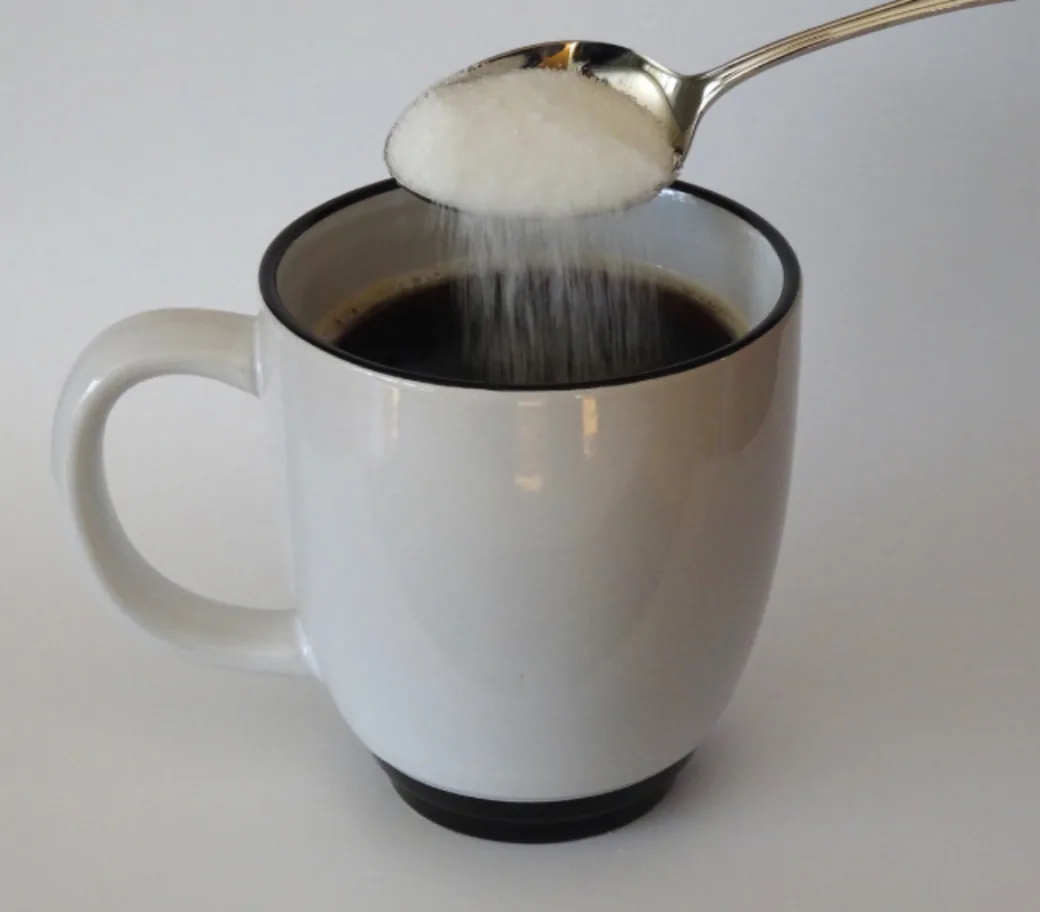
A cup of coffee is a complex mixture, and the amount of dissolved sugar in it strongly affects how sweet it tastes. Image: OpenStax, Chemistry 2e, CC BY 4.0.
Mixtures and their composition
 ⤢ Enlarge
Mixtures and their composition
This section describes one of the most common ways to measure the relative composition of mixtures. Its aim is to describe the fundamental properties of solutions, to calculate solution concentrations using molarity, and to perform dilution calculations using the dilution equation.
◀ Previous2 / 2
1Solutions2Solutions3Solutions
Solutions
Solutions
A solution is a homogeneous mixture, meaning that its composition, and therefore its properties, is uniform throughout its entire volume.
Solutions occur frequently in nature and are used in many forms of human technology.
A fuller treatment of solution properties appears in the chapter on solutions and colloids.
Here we introduce some of the basic ideas.
The relative amount of a given component in a solution is called its concentration.
Often, though not always, one component of a solution has a concentration much greater than all the others.
1 / 3Next ▶
Solutions
Solutions
This component is the solvent.
It is the medium in which the other components are dispersed or dissolved.
When water is the solvent, the result is an aqueous solution.
Aqueous solutions are very common on our planet.
A solute is a component that is normally present at a much lower concentration than the solvent.
Solute concentrations are often described in words.
◀ Previous2 / 3Next ▶
Solutions
1
A dilute solution has a relatively low solute concentration
while a concentrated solution has a relatively high one.
2
For precise work, chemists express concentration with numerical units, and each unit suits a particular kind of application.
◀ Previous3 / 3
1Molarity2Molarity
Molarity
1
Molarity, symbol M, is one of the most useful concentration units in chemistry.
2
Molarity is defined as the number of moles of solute in exactly 1 liter of solution.
3
The definition can be written as an equation: M = n ÷ V,
where M is the molarity in moles per liter, n is the amount of solute in moles (mol),(mol/L, read as molar)and V is the volume of the solution in liters (L).
4
The volume is the volume of the whole solution, not only the volume of the solvent.
5
Because of this definition, any two of the three quantities give the third.
6
The equation n = M × V gives the moles of solute in a known volume, and V = n ÷ M gives the volume that contains a known amount of solute.
1 / 2Next ▶
Molarity
Molarity
Volumes given in milliliters must be converted to liters before use
because 1 L = 1000 mL.
◀ Previous2 / 2
Rounding in stepwise calculations
1
When a problem is solved in several steps, do not round the intermediate results.
2
Keep at least one extra digit, called a guard digit, and round only the final answer.
3
Early rounding can change the final answer noticeably.
4
In the sodium chloride example below, the molar amount of NaCl is 1.325 mol.
5
If this value is rounded to 1.32 mol before the mass step, the final mass becomes 77.1 g instead of 77.4 g, a difference of 0.3 g.
6
Rounding errors can also be avoided by carrying out the whole calculation in a single step
so that only the final result is rounded. The worked example for the volume of vinegar that contains a given mass of acetic acid shows this approach.
1Dilution of solutions2Dilution of solutions3Dilution of solutions4Dilution of solutions
Dilution of solutions
Dilution of solutions
Dilution is the process by which the concentration of a solution is lowered by adding solvent.
A glass of iced tea becomes increasingly dilute as its ice melts.
The meltwater adds to the volume of the solvent and to the total volume of the tea,
while the amount of flavoring stays the same,so each sip is weaker.
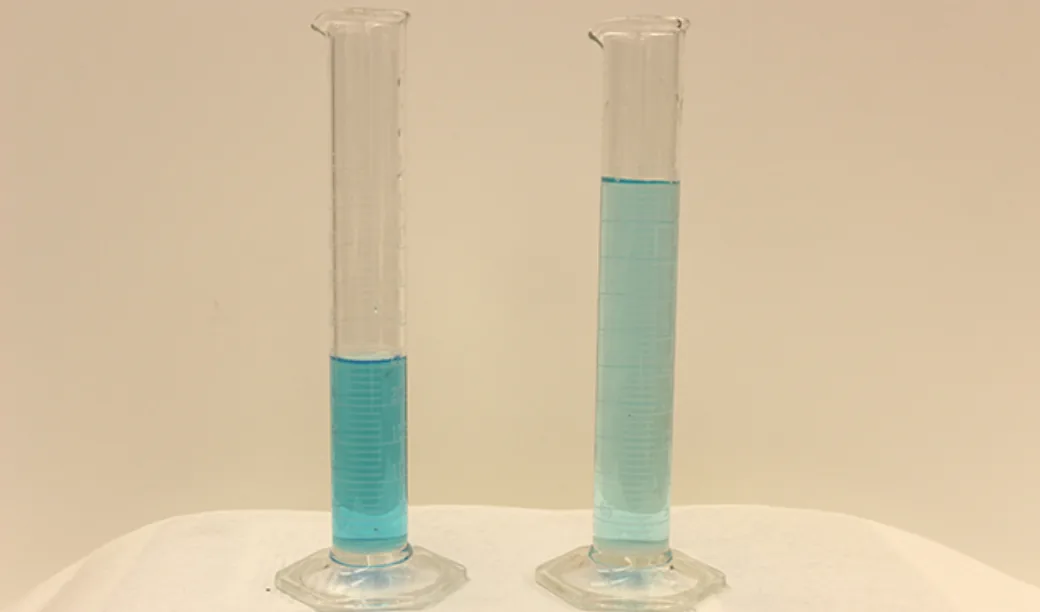
The figure below shows two solutions with the same mass of copper(II) nitrate.
The solution on the right is more dilute because the same solute is spread through more solvent.
1 / 4Next ▶
Two solutions contain the same mass of copper(II) nitrate, but the one on the right is more dilute because its solute is spread through more solvent. Image: OpenStax, Chemistry 2e, CC BY 4.0.
Dilution of solutions
 ⤢ Enlarge
Dilution of solutions
Dilution is also the usual way to prepare a solution of a chosen concentration.
A measured portion of a concentrated stock solution is mixed with solvent to make a less concentrated solution.
For example, commercial pesticides are sold as concentrates that must be diluted before they are used on crops.
Many common laboratory reagents are prepared in the same way.
Dilution does not change the amount of solute.
The moles of solute before dilution, n1, and after dilution, n2, are therefore equal.
◀ Previous2 / 4Next ▶
Dilution of solutions
1
Using n = M × V for each solution gives n1 = M1 × V1 and n2 = M2 × V2,
2
where the subscript 1 refers to the solution before dilution and the subscript 2 refers to the solution after dilution.
3
Since n1 = n2, the two expressions can be set equal
which gives the dilution equation: M1 × V1 = M2 × V2.
4
In this equation M1 and M2 are the molarities of the solution before and after dilution, in mol/L,
5
and V1 and V2 are the corresponding volumes, in liters (L).
6
Any other concentration and volume units may be used, as long as they cancel properly by the factor-label method.
◀ Previous3 / 4Next ▶
Dilution of solutions
1
For this reason the equation is often written in the general form C1 × V1 = C2 × V2
where C is the concentration and V is the volume.
2
Note that V2 is the total final volume of the diluted solution, not the volume of solvent added.
3
The volume of solvent added is V2 − V1.
4
Link to Learning: An online simulation from OpenStax lets you change the amount of solute, the volume of the solution and the concentration, and see how they are related. It is a good way to explore these relationships and to confirm the dilution equation for yourself.
◀ Previous4 / 4
1Example 3.14: Calculating a molar concentration2Example 3.15: Deriving moles and volumes from molarity3Example 3.16: Calculating a molar concentration from the mas4Example 3.17: Determining the mass of solute in a given volu5Example 3.18: Determining the volume of solution containing 6Example 3.19: Determining the concentration of a diluted sol7Example 3.19: Determining the concentration of a diluted sol8Example 3.20: Determining the volume of a diluted solution9Example 3.20: Determining the volume of a diluted solution10Example 3.21: Volume of a concentrated solution needed for d
Example 3.14: Calculating a molar concentration
Example 3.14: Calculating a molar concentration
Problem: A 355 mL soft drink sample contains 0.133 mol of sucrose (table sugar). What is the molar concentration of sucrose in the drink?
Solution: Both the moles of solute and the volume of solution are given
so use M = n ÷ V. The definition needs the volume in litersso convert first: 355 mL × (1 L ÷ 1000 mL) = 0.355 L. Then M = 0.133 mol ÷ 0.355 L = 0.375 mol/L = 0.375 M.
Check Your Learning: A teaspoon of table sugar contains about 0.01 mol sucrose. What is the molarity of sucrose if a teaspoon of sugar is dissolved in a cup of tea with a volume of 200 mL?
Answer: 0.01 mol ÷ 0.200 L = 0.05 M.
Answer: 0.01 mol ÷ 0.200 L = 0.05 M.
1 / 10Next ▶
Example 3.15: Deriving moles and volumes from molarity
1
Problem: How many moles of sugar are in a modest sip of about 10 mL of the soft drink from Example 3.14?
2
Solution: Rearrange the definition of molarity to isolate the moles of solute: n = M × V. Substitute the molarity from Example 3.14, 0.375 mol/L, and the volume 0.010 L: n = 0.375 mol/L × 0.010 L = 0.00375 mol, or 3.75 × 10⁻³ mol of sucrose.
3
Check Your Learning: What volume in milliliters of the sweetened tea described in Example 3.14 contains the same amount of sugar as 10 mL of the soft drink in this example?
Answer: The tea has a molarity of 0.05 M.
Answer: The tea has a molarity of 0.05 M.
4
V = n ÷ M = 0.00375 mol ÷ 0.0500 mol/L = 0.0750 L = 75 mL.
5
The textbook answer is 80 mL,
which is this value rounded to one significant figure, a reasonable choice because the teaspoon amount was itself approximate.
◀ Previous2 / 10Next ▶
Distilled white vinegar is a solution of acetic acid in water, and its molarity can be calculated from the mass of acetic acid in a known volume. Image: OpenStax, Chemistry 2e, CC BY 4.0.
Example 3.16: Calculating a molar concentration from the mass of solute
 ⤢ Enlarge
Example 3.16: Calculating a molar concentration from the mass of solute
Problem: Distilled white vinegar is a solution of acetic acid, CH3CO2H, in water. A 0.500 L vinegar solution contains 25.2 g of acetic acid. What is the concentration of the acetic acid solution in molarity?
Solution: The definition of molarity is the main equation
but the problem gives a mass rather than moles.
Use the molar mass of acetic acid, 60.05 g/mol (2 × 12.01 for carbon, 4 × 1.008 for hydrogen and 2 × 16.00 for oxygen), to convert the mass into moles: n = 25.2 g ÷ 60.05 g/mol = 0.4196 mol.
Then M = 0.4196 mol ÷ 0.500 L = 0.839 M.
Check Your Learning: Calculate the molarity of 6.52 g of CoCl2 (molar mass 128.9 g/mol) dissolved in an aqueous solution with a total volume of 75.0 mL.
Answer: 6.52 g ÷ 128.9 g/mol = 0.05058 mol
Answer: 6.52 g ÷ 128.9 g/mol = 0.05058 mol
75.0 mL = 0.0750 LM = 0.05058 mol ÷ 0.0750 L = 0.674 M.
◀ Previous3 / 10Next ▶
Example 3.17: Determining the mass of solute in a given volume of solution
Example 3.17: Determining the mass of solute in a given volume of solution
Problem: How many grams of NaCl are contained in 0.250 L of a 5.30 M solution? The molar mass of NaCl is 58.44 g/mol.
Solution: The volume and molarity are given
so first find the moles of solute: n = M × V = 5.30 mol/L × 0.250 L = 1.325 mol. Then convert moles to mass: 1.325 mol × 58.44 g/mol = 77.4 g of NaCl. The guard digit is kept in the intermediate step, as discussed above.
Check Your Learning: How many grams of CaCl2 (molar mass 110.98 g/mol) are contained in 250.0 mL of a 0.200 M solution of calcium chloride?
Answer: 0.2500 L × 0.200 mol/L = 0.0500 mol
Answer: 0.2500 L × 0.200 mol/L = 0.0500 mol
0.0500 mol × 110.98 g/mol = 5.55 g CaCl2.
◀ Previous4 / 10Next ▶
Example 3.18: Determining the volume of solution containing a given mass of solute
1
Problem: In Example 3.16 the concentration of acetic acid in white vinegar was 0.839 M. What volume of this vinegar contains 75.6 g of acetic acid?
2
Solution: First use the molar mass to find the moles of acetic acid: n = 75.6 g ÷ 60.05 g/mol = 1.2594 mol.
3
Then use the molarity to find the volume that holds this amount: V = n ÷ M = 1.2594 mol ÷ 0.839 mol/L = 1.501 L.
4
Combining both steps into one calculation gives V = (75.6 g ÷ 60.05 g/mol) ÷ 0.839 mol/L = 1.50 L
so only the final result is rounded.
5
Check Your Learning: What volume of a 1.50 M KBr solution contains 66.0 g of KBr? The molar mass of KBr is 119.00 g/mol.
Answer: 66.0 g ÷ 119.00 g/mol = 0.5546 mol
Answer: 66.0 g ÷ 119.00 g/mol = 0.5546 mol
V = 0.5546 mol ÷ 1.50 mol/L = 0.370 L.
◀ Previous5 / 10Next ▶
Example 3.19: Determining the concentration of a diluted solution
1
Problem: If 0.850 L of a 5.00 M solution of copper(II) nitrate, Cu(NO3)2, is diluted to a volume of 1.80 L by adding water, what is the molarity of the diluted solution?
2
Solution: The stock concentration C1 = 5.00 mol/L, the stock volume V1 = 0.850 L and the final volume V2 = 1.80 L are known.
3
Rearrange the dilution equation to isolate the unknown concentration: C2 = C1 × V1 ÷ V2 = (5.00 mol/L × 0.850 L) ÷ 1.80 L = 2.36 M.
4
Check the answer with a quick estimate first.
5
The volume more than doubles, from 0.85 L to 1.80 L
so the concentration should fall to somewhat less than half of 5.00 M, that is, below 2.5 M.
6
The answer 2.36 M fits this estimate
so there is no gross error.
◀ Previous6 / 10Next ▶
Example 3.19: Determining the concentration of a diluted solution
Example 3.19: Determining the concentration of a diluted solution
Check Your Learning: What is the concentration of the solution that results from diluting 25.0 mL of a 2.04 M solution of CH3OH to 500.0 mL?
Answer: C2 = 2.04 M × 25.0 mL ÷ 500.0 mL = 0.102 M CH3OH.
Answer: C2 = 2.04 M × 25.0 mL ÷ 500.0 mL = 0.102 M CH3OH.
◀ Previous7 / 10Next ▶
Example 3.20: Determining the volume of a diluted solution
1
Problem: What volume of 0.12 M HBr can be prepared from 11 mL (0.011 L) of 0.45 M HBr?
2
Solution: The stock volume V1 = 0.011 L and stock concentration C1 = 0.45 mol/L are known, together with the diluted concentration C2 = 0.12 mol/L.
3
Rearrange the dilution equation to isolate the unknown volume: V2 = C1 × V1 ÷ C2 = (0.45 mol/L × 0.011 L) ÷ 0.12 mol/L = 0.041 L = 41 mL.
4
The estimate is useful here too.
5
The new concentration is a little more than one-quarter of the original,
so the new volume should be a little less than four times 11 mL,which is about 44 mL.
6
The calculated 41 mL is consistent with this estimate.
◀ Previous8 / 10Next ▶
Example 3.20: Determining the volume of a diluted solution
Example 3.20: Determining the volume of a diluted solution
Check Your Learning: A laboratory experiment calls for 0.125 M HNO3. What volume of 0.125 M HNO3 can be prepared from 0.250 L of 1.88 M HNO3? Answer: V2 = 1.88 M × 0.250 L ÷ 0.125 M = 3.76 L.
◀ Previous9 / 10Next ▶
Example 3.21: Volume of a concentrated solution needed for dilution
Example 3.21: Volume of a concentrated solution needed for dilution
Problem: What volume of 1.59 M KOH is required to prepare 5.00 L of 0.100 M KOH?
Solution: The stock concentration C1, and the volume V2 and concentration C2 of the diluted solution, are given.
Rearrange the dilution equation to isolate the stock volume: V1 = C2 × V2 ÷ C1 = (0.100 mol/L × 5.00 L) ÷ 1.59 mol/L = 0.314 L.
The estimate is useful here: the diluted concentration is roughly one-sixteenth of the stock concentration,
so the stock volume should be about one-sixteenth of 5.00 L,or roughly 0.3 L.
The result of 0.314 L is consistent with this estimate.
Check Your Learning: What volume of a 0.575 M glucose solution, C6H12O6, can be prepared from 50.00 mL of a 3.00 M glucose solution? Answer: V2 = 3.00 M × 0.05000 L ÷ 0.575 M = 0.261 L.
◀ Previous10 / 10
Key terms
| Term | Meaning |
|---|---|
| Mixture | A sample of matter that contains two or more substances physically combined. |
| Homogeneous mixture | A mixture whose composition is uniform throughout its entire volume. |
| Solution | A homogeneous mixture in which one component, the solvent, is present in much greater amount than the others. |
| Concentration | The relative amount of a given component in a solution. |
| Solvent | The component of a solution present in the greatest amount, in which the other components are dissolved or dispersed. |
| Aqueous solution | A solution in which water is the solvent. |
| Solute | A component of a solution that is present at a much lower concentration than the solvent. |
| Dilute | Describes a solution with a relatively low solute concentration. |
| Concentrated | Describes a solution with a relatively high solute concentration. |
| Molarity (M) | The number of moles of solute in exactly 1 liter of solution, in mol/L. |
| Dilution | The process of lowering a solution’s concentration by adding solvent. |
| Stock solution | A concentrated solution that is measured out and diluted to prepare a solution of lower concentration. |
| Dilution equation | The relation M1 × V1 = M2 × V2 between the concentration and volume of a solution before and after dilution. |
| Alloy | A mixture of a metal with other elements, such as steel, whose composition determines its physical strength and resistance to corrosion. |
1Avoid these mistakes2Avoid these mistakes
Avoid these mistakes
1Avoid this
Using the solvent volume instead of the total solution volume in M = n ÷ V. The volume in the definition is that of the whole solution.Avoid this
2Avoid this
Forgetting to convert milliliters to liters before dividing. For example, 355 mL must become 0.355 L, not 355 L.Avoid this
3Avoid this
Using the mass of solute directly in the molarity equation. Convert the mass to moles with the molar mass first.Avoid this
1 / 2Next ▶
Avoid these mistakes
4Avoid this
Treating V2 in the dilution equation as the volume of water added. V2 is the final total volume, and the water added is V2 − V1.Avoid this
5Avoid this
Mixing units in M1 × V1 = M2 × V2, for example using mL for V1 and L for V2, or rounding the intermediate result so that the final answer is off.Avoid this
6Avoid this
Thinking that dilution changes the amount of solute or increases the molarity. Dilution keeps the moles of solute the same and lowers the molarity.Avoid this
◀ Previous2 / 2